In the world of Latin American television, few names inspire as much respect and affection as that of Juan Carlos Troncoso, a screenwriter who has dedicated his life to telling stories that touch the soul. A disciple of the unforgettable Fernando Gaitán, creator of “Yo soy Betty, la fea” (Ugly Betty), Troncoso has been the mind behind productions that have resonated with millions of viewers in Colombia and around the world.
Oscar “Blue” Ramirez
Journalist and international correspondent
Oscar Ramírez is a Mexican journalist from Tijuana, Baja California, graduated in Communication and radio announcer.
Recognized for his experience in international migration issues, he has traveled and documented all the borders of northern Mexico with the United States. In the south of the country, he has walked and registered more than 12 migrant caravans, in addition to documenting the route of the Central American Triangle and crossing the dangerous Darién jungle on four occasions, between Panama and Colombia - one of the deadliest routes in the world for migrants.
As a war correspondent, he has covered international conflicts in Ukraine (border with Russia) and in the Middle East, reporting from Israel with the borders of Gaza, Lebanon and Syria.
Currently, Oscar Ramírez works as a bilingual correspondent for various media and is part of the international team of Real America's Voice News, a recognized media in the United States.
In 2023, he was awarded at the Congress of Colombia with the Diana Turbay Award, one of the most important journalistic recognitions in the country, for its coverage and documentation of the migratory route through the Darién jungle.
Beyond his informative work, Oscar Ramírez has distinguished himself for his humanitarian journalism, focused on giving voice and face to the stories of migrants and communities affected by violence and international conflicts.
It is one year since the Hamas attack that left 1,200 people dead and 251 kidnapped, the deadliest offensive suffered by the Jewish people since the Holocaust.
This Monday, October 7, marks the longest and most traumatic day in history: one year since Hamas’ attack on Israel, the most serious in history on the territory of the State of Israel and the one that has caused the most deaths since World War II.
The Israeli response could mean a new escalation in the region, which has reached the point of a new open war that could be devastating.
Since then, Gaza has already recorded more than 41,000 murders, most of them women and children, after twelve months of Israeli genocide.
The armed conflict between the State of Israel and the group of militia groups led by Hamas escalated a year ago, on October 7, 2023, with a coordinated surprise offensive against Israel.
The Israeli army continues to carry out airstrikes and fight in the territory, with the aim of recovering the captives and destroying the Islamist group, classified as a “terrorist” organization by the United States, the European Union and the Hebrew State.
But Hamas continues to fight. The Ezedin al Qassam Brigades, its armed wing, said on Monday that it launched a barrage of rockets at the Israeli city of Tel Aviv.
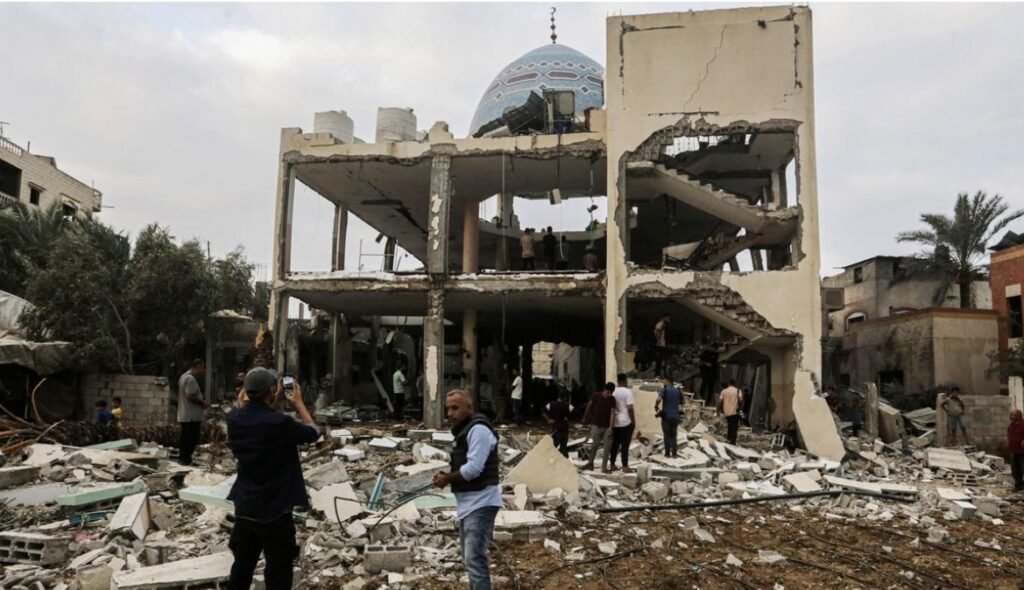
The city of Gaza was unrecognizable on Monday, devastated by continuous bombing and fighting between Israeli forces and Hamas militants.
Among buildings destroyed or without facades, some residents walked on dirt roads, with mounds of rubble on both sides of the street.
Traffic is almost nonexistent in the city, as there is a shortage of fuel. Most residents walk, use bicycles or get around with the help of donkey carts.
According to the United Nations, 92% of Gaza’s streets and more than 84% of its health facilities have been damaged or destroyed in the war.
But that’s not all that’s missing. “There’s no electricity or petroleum products. There’s not even firewood. Food is almost non-existent,” said Hussam Mansur, 64.
Written by Oscar El Blue
One year after Hamas attacked Israel, the longest and most traumatic day in history