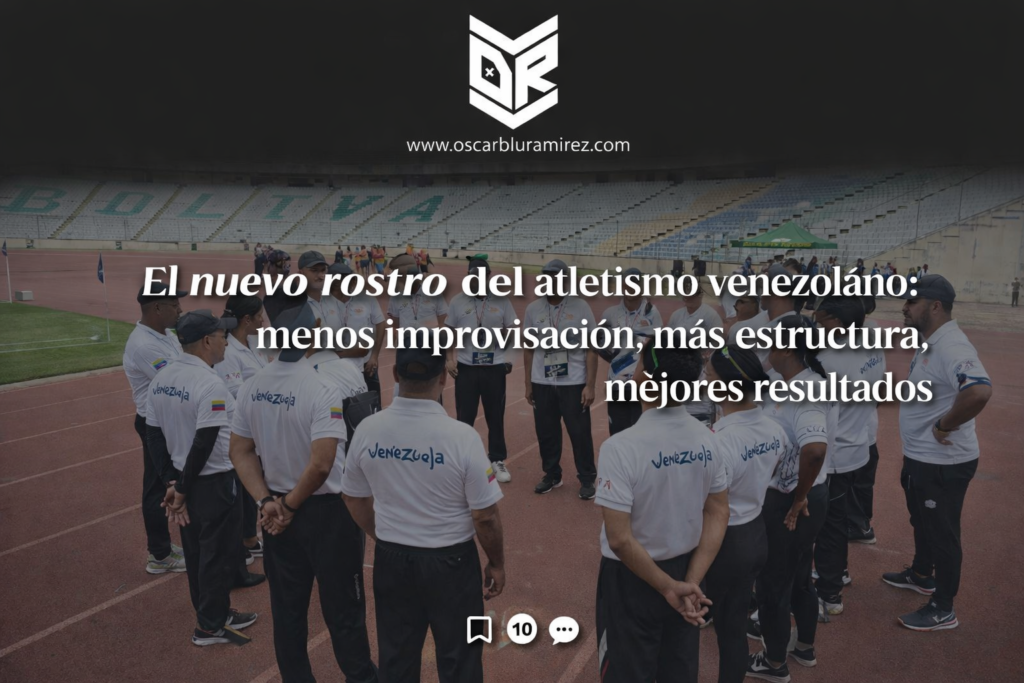
El nuevo rostro del atletismo venezolano: menos improvisación, más estructura, mejores resultados
La apuesta por la formación, la descentralización y el fortalecimiento del arbitraje impulsa un modelo
La apuesta por la formación, la descentralización y el fortalecimiento del arbitraje impulsa un modelo



Always your country first
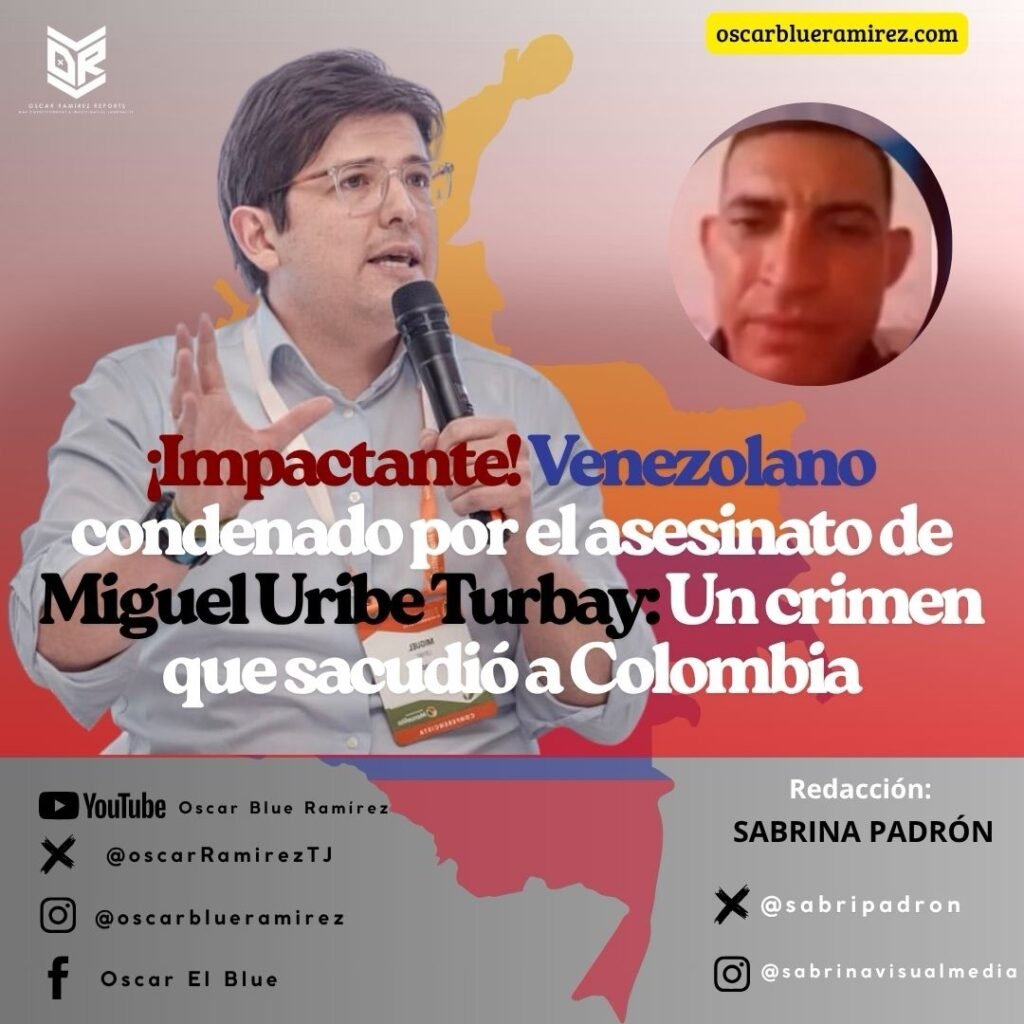
The news spread across the country like lightning: Miguel Uribe Turbay, a man of political steadfastness and defender of democracy, was cruelly and deliberately assassinated. Now, Carlos Eduardo Mora, a Venezuelan known in judicial circles as “El Veneco,” has been convicted of this assassination, which left a deep wound in the soul of Colombia.
The news not only caused outrage, but also revealed a series of international connections, implicating external actors in what originally seemed like an isolated crime. But what truly shocked the country was the discovery that the murder was not just the act of one man, but part of a larger conspiracy woven by radical groups intent on destabilizing Colombia’s political landscape.
Miguel Uribe Turbay, a politician who always stood firm in his principles of fighting drug trafficking and corruption, was the victim of a brutal attack. His murder, carried out in broad daylight, reflected the desperation of those who opposed his fight for a more just country. Carlos Eduardo Mora, known in the criminal world as “El Veneco,” was arrested shortly after the murder, and after an exhaustive judicial process, was convicted for his participation in the crime that shook the foundations of Colombian politics.
Most disturbing was the discovery of Mora’s connections to extremist groups, whose sole purpose was to stop any politician who represented a threat to their radical ideals. Since arriving in Colombia, Mora had forged a network of contacts, not only in his native country but also in different regions, merging with factions that advocate an ideology that knows no borders.
Mora’s conviction has highlighted the growing threat from groups operating outside Colombia’s borders, but determined to intervene in its internal affairs. The sentencing made it clear that Uribe Turbay’s murder was not an isolated incident, but part of a broader strategy to destabilize the region. Apparently, Veneco did not act alone. Other actors were also involved, some of whom are still at large.
Colombian authorities, supported by international agencies, have taken significant steps to ensure that those responsible for this crime are brought to justice. However, this case serves as a wake-up call about Colombia’s vulnerability to foreign influences seeking to manipulate its democratic processes.
After the sentencing, Miguel Uribe Turbay’s family has expressed a sense of justice, although the wound remains open. Meanwhile, the international community is watching closely, wondering to what extent transnational conflicts will continue to affect political stability in Latin America.
“This crime was not only an attack against Uribe Turbay, but a direct attack on Colombian democracy,” said one of the family’s lawyers, underscoring the seriousness of the incident.
In short, what happened to Miguel Uribe Turbay and Carlos Eduardo Mora has left more questions than answers. As Colombia tries to piece together a country fragmented by political violence, this case will be a constant reminder of the risks democracy faces in an increasingly polarized global context.
By: Sabrina Padrón
/ IG @sabrinavisualmedia / X @sabripadron
“Thank you for reading. Stay informed with us.”