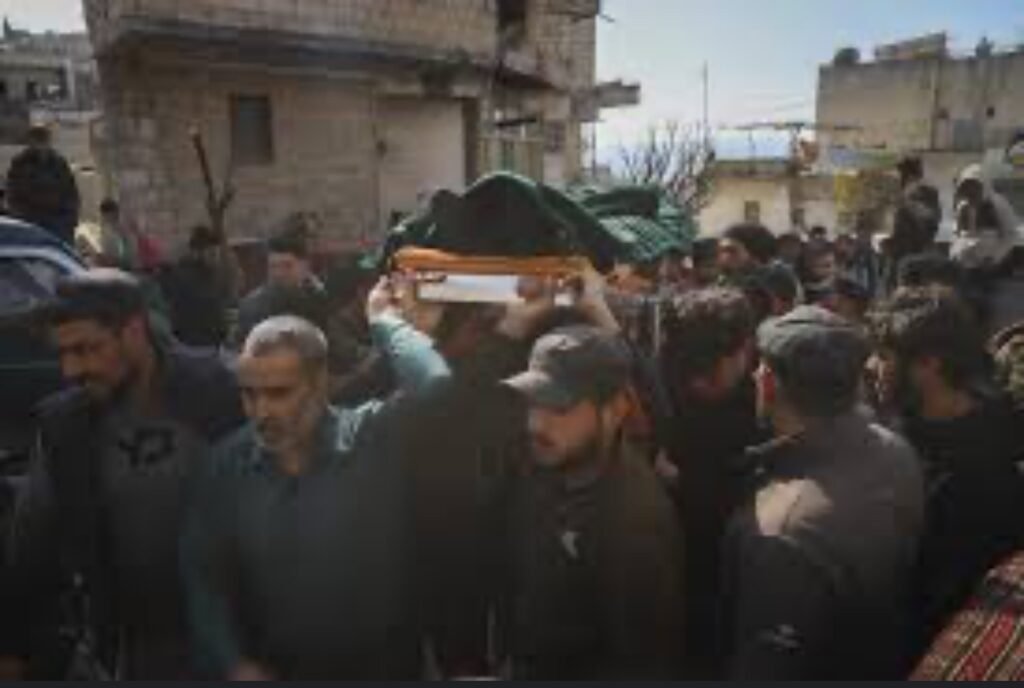
Más de mil muertos en tres días por violencia en Siria
El Observatorio de Derechos Humanos aseguró que las nuevas fuerzas de seguridad de Siria "han
El Observatorio de Derechos Humanos aseguró que las nuevas fuerzas de seguridad de Siria "han




Always your country first

Hezbollah’s top leader, Hassan Nasrallah, was killed in a massive Israeli airstrike on Friday targeting the militant group’s headquarters in Beirut, the Israeli military announced Saturday.
In a statement, the militia said Nasrallah “has joined his fellow martyrs” and vowed to continue “the holy war against the enemy and in support of Palestine.”
According to the Lebanese Ministry of Health, six people were killed and 91 others wounded in Friday’s attacks in Beirut, which leveled six apartment buildings. Ali Karki, commander of Hezbollah’s Southern Front, and other senior military officials in the group were also killed in the incident, the Israeli military said.
Lt. Col. Nadav Shoshani, an Israeli military spokesman, said the airstrike was based on years of tracking Nasrallah, as well as “real-time information” that made it possible.
Shoshani declined to reveal the type of munitions used and did not offer an estimate of civilian casualties, adding that Israel takes steps to prevent civilian deaths whenever possible and legal and intelligence experts authorize attacks in advance.
The Palestinian militant group Hamas conveyed its condolences to its Lebanese ally in a statement. Nasrallah used to describe rocket fire into northern Israel as a “support front” for Hamas and the Palestinians in Gaza.
“History has shown that in the resistance … whenever its leaders die as martyrs, they will be succeeded on the same path by a generation of leaders who are braver, stronger and more determined to continue the confrontation,” the Hamas statement said.
The “assassinations will only increase the resistance in Lebanon and Palestine in determination and resolve,” it added.
Israel commented
It has pledged to increase pressure on the Lebanese militant group until it stops its actions, which have displaced tens of thousands of Israelis from communities near the border. The recent attacks have forced more than 200,000 Lebanese to flee their homes in the past week, according to the United Nations.
Ayatollah Ali Khamenei, Iran’s supreme leader, who backs both the Lebanese paramilitary group and Hamas, among others, said that “the resistance movement led by Hezbollah will decide the future of the region,” in a statement read on state television on Saturday.
“All regional resistance forces must stand firm and support Hezbollah,” he said, adding that the group is strong enough to withstand Israeli attacks.
Who was Hassan Nasrallah?
The secretary general of the Lebanese militant movement Hezbollah, Hassan Nasrallah, who was killed in an Israeli strike on Beirut on Friday, led the Shiite militant and political organization since 1992.
Born in Beirut in 1960, Nasrallah began his political career in the Amal Movement before joining Hezbollah in the early 1980s. Under his leadership, Hezbollah became a powerful force with significant military capabilities and political influence in Lebanon.
Nasrallah extended the organization’s reach far beyond Lebanon. Hezbollah fighters, considered Iran’s proxy force by Washington and its allies, played a decisive role in shoring up President Bashar al-Assad’s government in Syria. Classified as a terrorist organization by the US, Hezbollah helped train Hamas fighters as well as militias in Iraq and Yemen, writes The New York Times.
Written by: Oscar El Blue
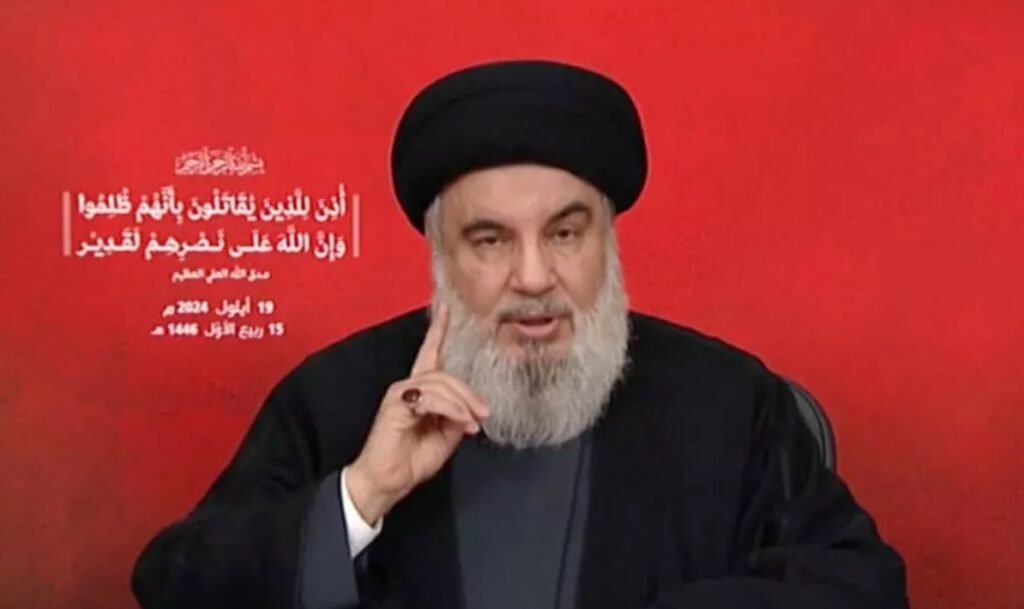
Hezbollah’s top leader, Hassan Nasrallah